

Run Payroll Not fun at all. But if you want your employees happy (and getting paid), every business owner should.
The payroll process takes care of everything you need to pay your employees while maintaining compliance with labor and tax laws. For example, registering tax identification numbers, accurately tracking working hours, calculating and withholding taxes, sharing payslips, and more.
That’s a lot, we got it. So, what is payroll, how to do it right, and instructions for choosing the right software to set up the payroll process.
What is payroll?
Payroll is basically the process of paying employees. This includes tasks such as calculating taxes, including Social Security and Medicare taxes, and tracking hours worked.
Convert timesheets to hours, process tax returns, issue 1099, W-2, and W-4 forms, offer benefits, and actually distribute employee payroll. All of this is under the payroll umbrella.
As a small business owner, you probably handle payroll yourself. In large organizations, this may be delegated to HR personnel or accountants. Luckily, smart tools like Homebase give you everything you need to do the job right without hiring extra people.
How payroll works in small businesses
Small businesses have different payroll systems. The main reason is that small businesses have different needs and don’t need as many different features as large businesses. These extras tend to come with a steep learning curve (and price tag!).
Another important difference is that many small businesses choose to pay their employees by the hour. Since then Hourly wage Unlike payroll, it requires different processes and tools.
Hourly wages are based on hourly wages, and wages are paid according to the hours worked. On the other hand, salaried workers are paid a fixed amount every month. Hourly wages require careful calculation of each employee’s timesheet and overtime, so clock When employee scheduling Software is often required.
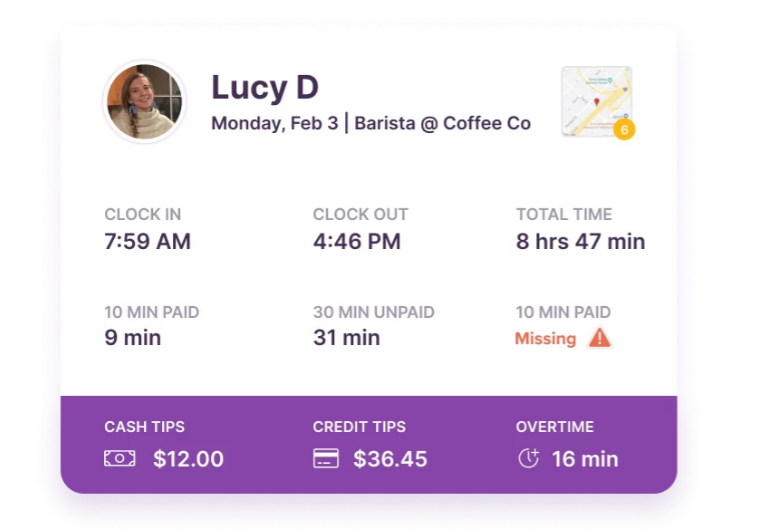
Different elements of payroll
Running a payroll run has many processes and tasks and is not an easy task to perform. You need to collect employee information, set pay schedules, calculate and deduct withholding taxes, and much more. It can quickly feel pretty overwhelming.
Remember you are not alone. You don’t have to DIY payroll for your entire business. Let’s break down some of these salary components a bit now.
payslip
For SMEs with hourly workers, payslip is a combination of the pay period, the length of time the employee worked, and the pay date (the date the employee receives the check).
The most common pay schedules in the US are weekly, bi-weekly, semi-monthly, and monthly. A weekly schedule is ideal for small businesses as it simplifies the calculation of overtime, which is usually irregular. This way, employees can get paid as soon as possible, giving them more flexibility in managing their finances.
Choosing the right schedule for your business is very important. This is because it impacts everything from payroll processing costs to employee morale to compliance with state and federal laws.
payroll tax
Tax calculation and withholding is an important part of payroll. Taxes and tax rates can also vary from state to state, which can make this whole process more complicated.
Good news: there are only five federal governments and federal governments. state payroll tax To get started you need to know:
Once you’ve done that, check to see if your business is subject to additional state or local taxes.
Health insurance premium
Providing health insurance to your employees is a great way to set your business apart and attract top talent in a competitive labor market. But if you’re running the show primarily by yourself, Health insurance premium and payroll tax interactions can be daunting.
Essentially, employer-sponsored health insurance premiums are pre-tax for both employees and employers. This means that money spent on employee health insurance premiums is exempt from federal taxable income, payroll tax (Be sure to check with your CPA, of course!)
So be sure to consider your benefit contributions and deductibles before calculating and withholding your taxes.
labor cost
Keeping payroll running smoothly can be costly. However, depending on the type of payroll system you use and whether you outsource these activities, labor cost can change a lot. If you’re using a payroll services solution, you’ll incur costs such as:
- Basic monthly fees and charges for each employee during payroll
- 401k distribution
- track employee hours
- worker’s compensation
- Direct debit, state and federal tax returns
- Paid vacation and overtime
- Bonus
Salary Summary Report
a Salary Summary Report An overview of all payroll activities is displayed. This includes employee details such as net and gross salary, employer taxes, etc. Maintaining and properly storing these documents is very important. required by the federal government File several payroll report forms including Form 940, Form 941, W-2s, and W-3s.
You may also be responsible for local payroll reporting, so check your local employment laws to cover your base.
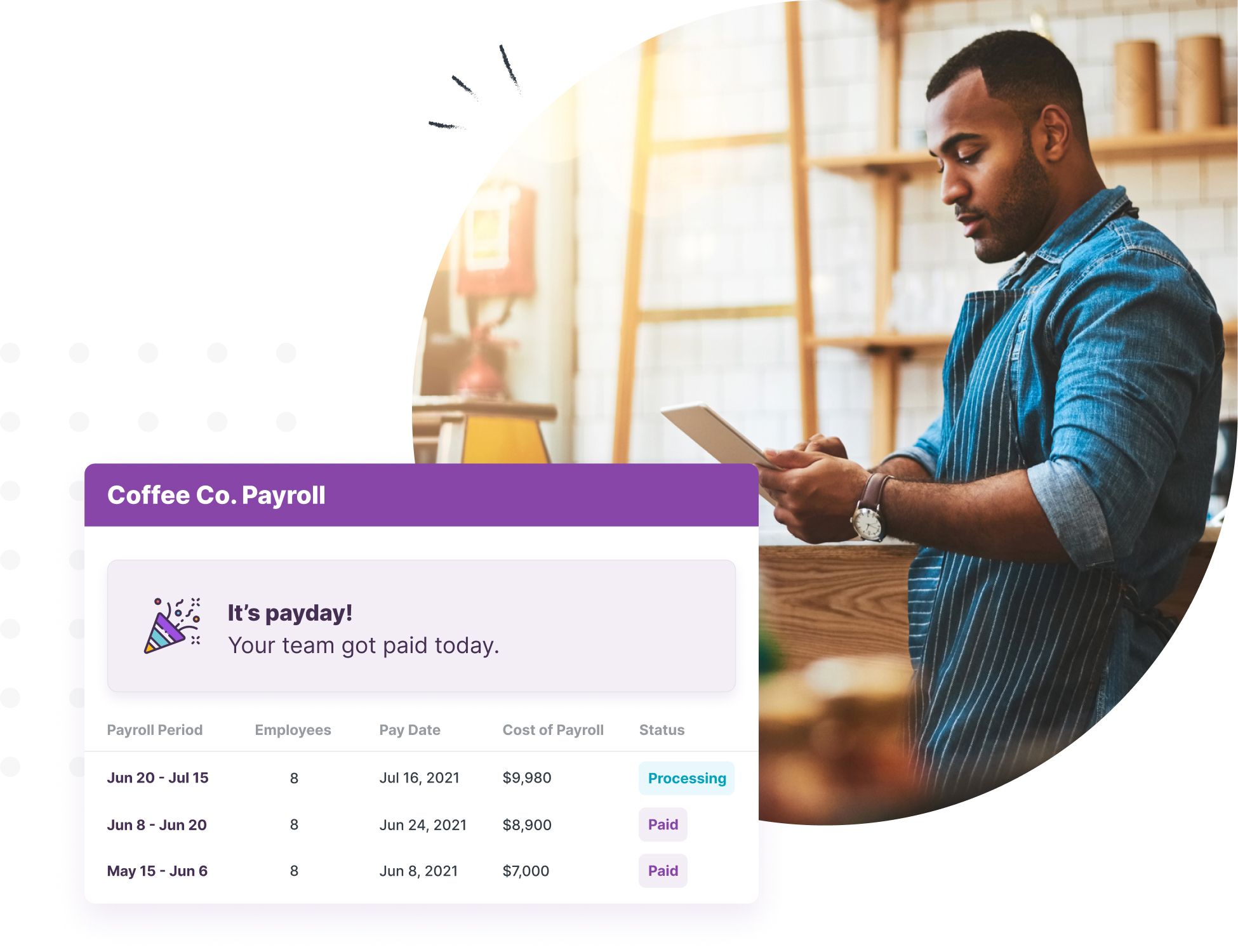
How to choose the best payroll software for your business
While it is definitely possible to process payroll manually, it is a complicated process and prone to errors. That’s where payroll software comes in. These tools help reduce labor costs, maintain compliance with federal and state laws, and reduce payroll errors.
There are different types of payroll software, including solutions like Gusto, BambooHR, OnPay and others. But most of these platforms aren’t made specifically with hourly workers or small businesses in mind. In other words, it doesn’t offer an all-in-one solution with scheduling, time tracking, automatic deduction calculations, and all the other features you need for hourly payroll.
Additionally, they are often designed for large enterprises, not those with fewer than 20 employees.
when you do Choosing a payroll providermake sure it’s not only secure and scalable, but actually made for businesses like yours!
How payroll is set up and processed
when it comes to reality payroll system setupthere are some important points to keep in mind. Before we get to the heart of the matter, decide what your payroll policy will be and how you will handle that process.
Do you handle everything in-house? Or will you outsource to an accountant or an online payroll service? And what will your payroll schedule look like? Don’t forget to document your policy. This makes everything public and transparent to your employees.
Next, register as a business with the IRS and obtain an Employer Identification Number (EIN). Make sure every member of your team has filled out the correct tax forms, then calculate the number of federal and state taxes that must be withheld from each employee’s income.
As an employer, you must also file quarterly federal tax returns. Next, at the end of each year, an annual return including her W-2 for all her members of staff must be prepared.
Finally, calculate salaries and pay employees. It may sound like a lot, but the process can be boiled down to 10 steps:
- your Employee EIN
- Register for the Electronic Federal Tax System (EFTPS)
- learn your area salary law
- your decision payslip
- New employee report to the state
- prepare the right documents like a W-4
- Keep track of new hires pay the fee
- Calculate your tax credit and state tax
- distribute the salary keep records
- use accounting software to help you along the way
Yes – it can be difficult to do small business salary yourself. But if that’s what you want, it’s possible with patience and hard work.

How Homebase streamlines payroll for hourly employees
Running the payroll process yourself requires many steps and can be difficult and exhausting to accomplish, especially if you don’t use HR services to help.
A payroll software specifically designed for small businesses can be very helpful. This saves you the headache of having to remember every step of the payroll yourself and risking even accidental non-compliance. That’s why we’ve highlighted how Homebase simplifies payroll and makes it easier to stay compliant.
clock
With this feature, you can connect almost any device connected to the Internet to employee time clock system. All you need to do is download the online time clock for your employees and sign in. Team members can then use their personal pins to clock in and out using the time clock.
You will then be able to track your hours, breaks, overtime and paid time off. Homebase instantly converts timesheets into payroll hours and wages. Timesheets and payroll, all in one place!
scheduling
home base scheduling Solutions help optimize employee schedules and ensure you and your team are always on the same page.
Instantly share schedules with employees, optimize shifts using templates or automated scheduling, automatically notify employees of upcoming shifts via text, and receive alerts to avoid overtime.
Optimized schedules also make it easy to track employee total hours and find overtime hours that need to be accounted for. This simplifies the payroll run at the end of the payroll schedule.
integration
Homebase offers a variety of services integrationSo if you’re already using a payroll solution like Quickbooks or Square, you don’t have to worry about manually entering and transferring data.
Save time and reduce unnecessary extra data entry by having your entire tech stack automatically synced, from Shopify and Paychex to Vend and Toast.
payroll
Last but not least, our Salary The solution automates the entire payroll process so you can focus on what matters. Here’s what we do:
- Calculate wages and taxes and send correct payments to employees, states, and the IRS.
- Automatically process tax returns and issue 1099s and W-2s.
- Keep your time card records to help you stay compliant with FLSA’s record-keeping rules.
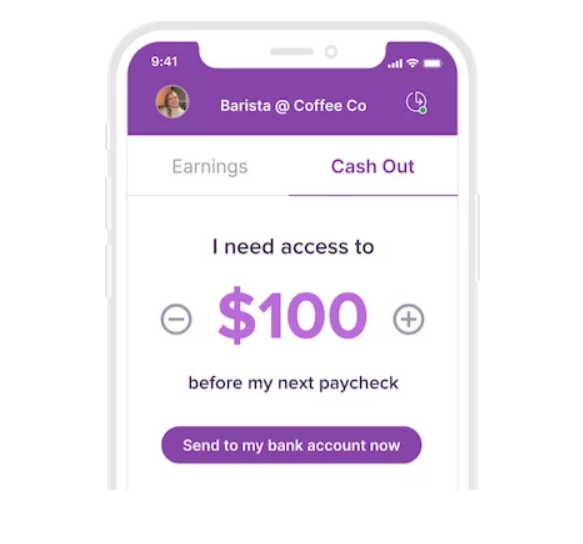
Additional team perks include the following options: Access a portion of your wages before paydayThis gives employees more control in the event of an unexpected expense, with less expense and hassle.
Seamless payroll is just a click away
Running a payroll as a small business owner is complex beyond simply calculating wages and sending payments.
You must calculate and withhold taxes, comply with federal, state, and local laws, prepare payroll reports, and determine a consistent payroll schedule. And you have to do all of this while actually running your business.
If that seems too time-consuming and confusing, we’ve got you covered! Homebase handles everything from automating payroll processes and converting timesheets to hours and wages to automatically processing tax returns. Focus on growing your business and doing what you love.
